
In the second part of our series debunking popular cookery terms we discuss Induction Cooking, Blanching and Spiralizing. We explain what these cooking methods are as well as the best way to utilize them in order for you to have more Winning Moments in the kitchen.
Induction Cooking

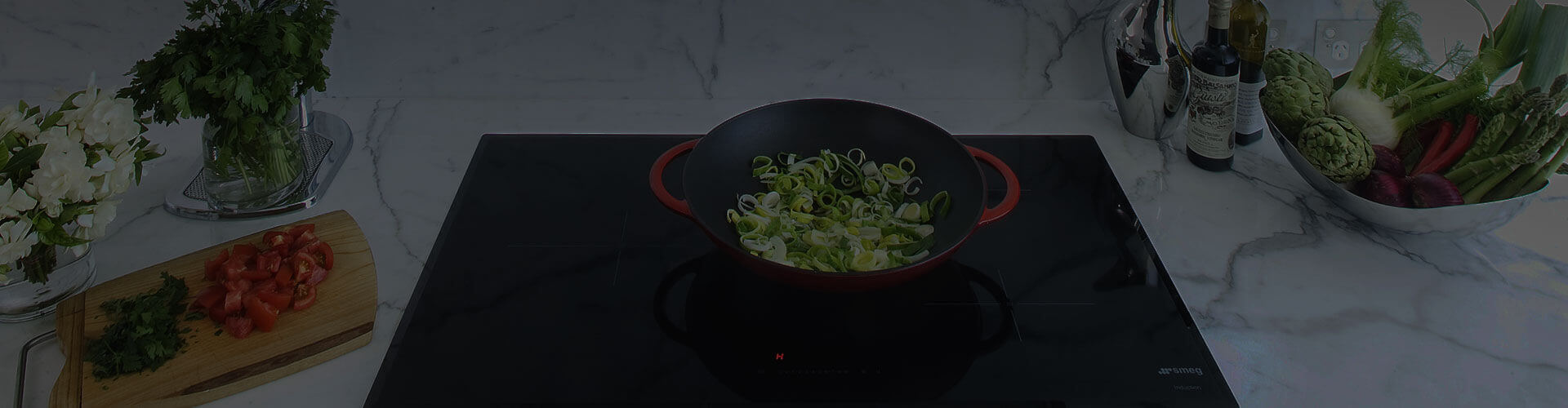
Although induction cooktops look the same as their electric counterparts they work quite differently. An induction cooktop uses electromagnetic energy to directly heat the cookware rather than the cooktop itself, resulting in a much faster and more precise way of cooking. Induction cooktops are also much more energy-efficient as there is zero wasted heat, plus they can be easier to maintain as it’s not a problem to wipe any spillages that occur during cooking due to the surface not being heated.
It is important to note that induction cooktops only function with ferromagnetic cookware (e.g. metal pots and pans that magnets will stick to), so if you’re a huge fan of cooking with glass or stone utensils this may not be the right choice for you. Induction cooktops do feature flexible cooking zones though, which means they can accommodate cookware of varying shapes and sizes at the same time.
Browse our Winning range of Induction Cooktops here and get in touch with one of our experts if you have any questions about this product.
Blanching

Blanching is rather funny sounding term for a cooking technique that involves briefly immersing food in boiling fat or water. This technique will often feature in recipes where vegetables need to be softened before cooking quickly over a high heat, such as in a stir-fry.
Blanching can also be used to soften vegetables that will be featured in a salad – it removes some of the rawness of ingredients like carrots or broccoli while still retaining their crunch. Green beans are often blanched before being added to a Nicoise Salad – it softens them without draining their colour.
Remember that if you are blanching vegetables, prepare an ice water bath to plunge them in afterwards in order to halt the cooking process.
Spiralizing

(Image thanks to theeverygirl.com)
Spiralizing became popular recently as health food bloggers advocated the use of spiralized fresh vegetables in place of carb-filled pastas and noodles.
Spiralizer’s start from around $39.95 so it’s a pretty inexpensive tool to add to the kitchen bench if you fancy adding fresh veggie curls to your salads or serving your pasta sauce on ‘zoodles’. Check out The Every Girl’s 15 recipes to cook with your spiralizer for some great suggestions including Apple Arugula Salad with Goat Cheese and Pesto Zuchinni with Sundried Tomatoes.