-636837267737403163.jpg)

To sum up, last time we advised:
- Consulting with your designer/architect to work out a general sense of the appliances that match best with your design vision.
- Clarifying what it is you want to renovate - the look, the functionality or both?
- And that we can liaise with your designer/architect to ensure best outcomes for your project.
Now please read on!
-636837159907768844.jpg)
Planning the space:
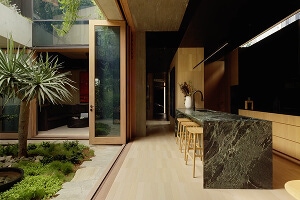
Be sure to spend time ensuring the space is absolutely right for your needs. One of the key focuses will be the "kitchen work triangle" (which includes the sink, fridge and cooktop/oven), where you'll want to find an appropriate spaciousness. You'll need room to move - but the last thing you want is a marathon walk carrying food from the preparation area to the cooking area. Instead it's best to pitch for a judicious, "comfortable" amount of space. Making sure you have enough prep area will be important, for example, as well as having ample set-down benchtops on either side of the cooking zone.
You'll also want to think about the "flow" of the space. For example, a preparation surface would be well-positioned near a bin area and sink area to allow for washing of vegetables.
Island benches are also a popular way to cultivate an inspirational flow - ensuring a welcoming area that people can gather as well as prepare food. Keeping the flooring consistent between the living space and the kitchen will help to emphasis a free-flowing energy.
Remember, you'll also be required to leave space for ventilation - and power and water connections where necessary.
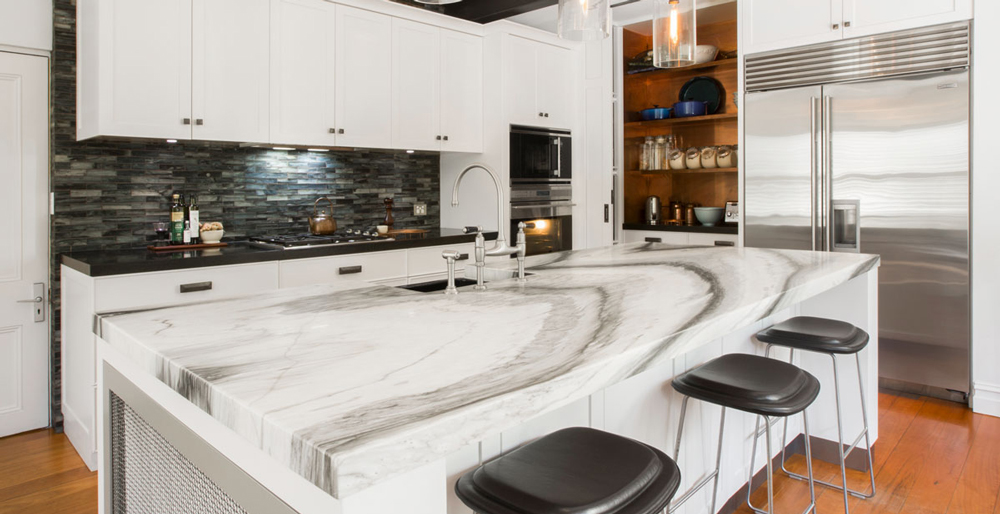
Visually, we recommend not having too much going on throughout the entire space - but focus on one or two particular focal points while surrounding it with less demonstrative details. This avoids making the kitchen seem too cluttered.
Family friendly:
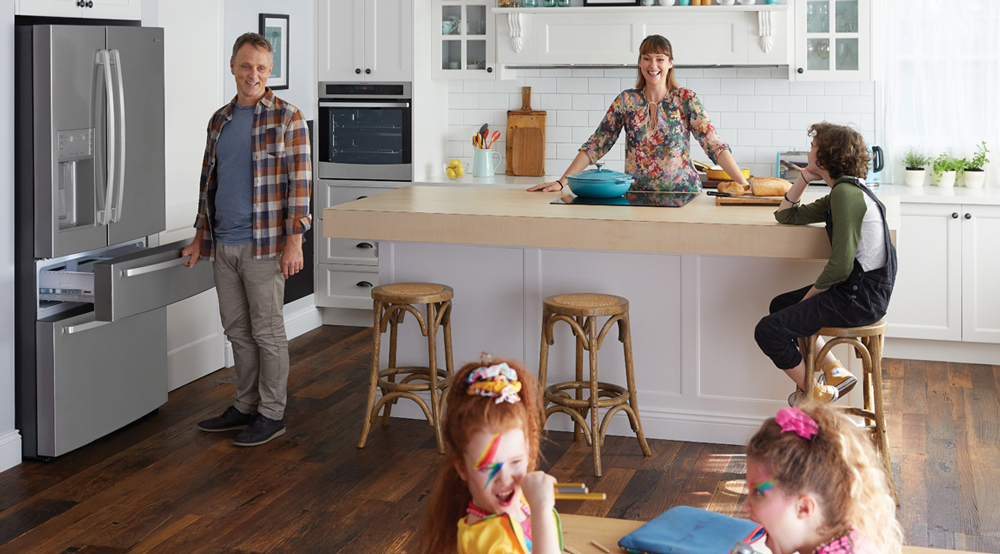
If you're designing a kitchen for a family home (particularly one with young children in it), you might want to think about keeping the cooktop and oven out of traffic areas - while the fridge should ideally offer easy access to the passerby and those working in the prep, cooking and cleanup areas.
You'll also want to factor in a place for more dangerous implements - such as kitchen knives - that's out of your children's reach, while incorporating multiple electrical outlets to ensure you have plenty of power for snack-and-smoothie making small appliances. Of course, you'll also want to anticipate that those kids will grow up - and you'll need to provide a bit of room to move eventually!
Levels:
For convenience and practicality, it can help to think about grouping things together according to height. Taller items such as the fridge, for example, along with the pantry and high cupboards, could work well in one area, with shorter items or low benches in another section. Planning around the function of each appliance is also a good idea - as in, positioning the cupboard designed for large plates or dishware near the dishwasher or sink for easier unloading.
Beware of corners and tight spaces:
...when it comes to door openings - especially those of appliances, such as dishwashers, where they might bang into benches and drawers once opened. The flow of space will be ruined if a swinging door comes down with a clunk to cut off access through a kitchen, needing to be stepped over.
Of course, it might seem like a juggling act getting all of these elements factored into the equation - but consider the long-term rewards of spending a bit of time working to get your kitchen absolutely right! 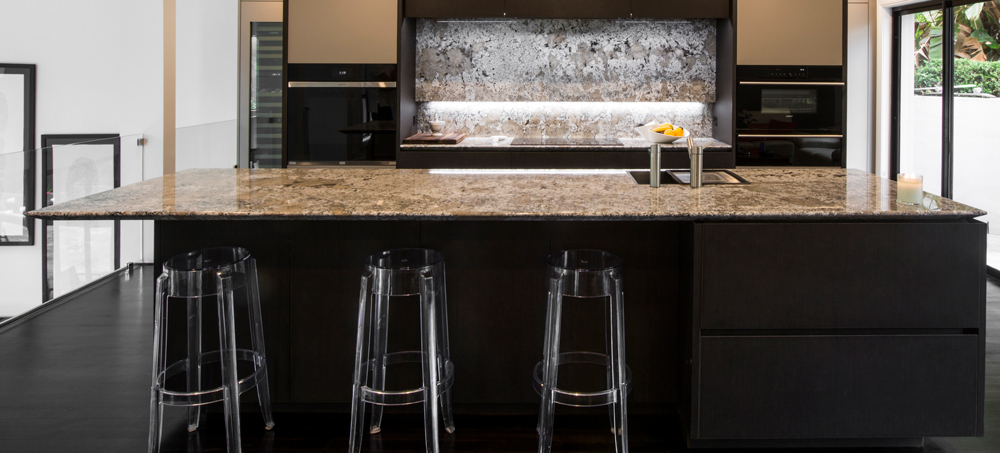
The Quick Reno:
If a complete operation seems a little too ambitious, there are more simple ways to enhance your kitchen. Of course, one of those is just updating your appliances - that new steam oven will be a joy to use, while adding a gorgeous contemporary detail to your home. Meanwhile, benchtops are one of the most prominent features of any kitchen, so if yours are starting to show their age, they will effect the overall look of the space ... an update to a natural material such as granite will definitely help modernise things.
Planning ahead:
It always pays to keep thinking ahead. For example, there's a possibility you'll have to upgrade your power if you choose to upgrade your appliances. Induction cooktops, for example, will require a special power connection to handle their energy usage. A normal domestic plug will have a 10Amp connection - whereas an induction cooktop may require anything up to a 42A connection (needing to be hard-wired by a licensed electrician).
During the renovation, you'll probably find yourself with the prospect of no appliances (or no kitchen) for some amount of time. Items such as a portable hot plate and mini-fridge will keep things functional while you go through this brief hiatus. These will always be handy in the long run - a second fridge being ideal for a bar or entertaining area. You'll find a selection of these items available at Winning Appliances.