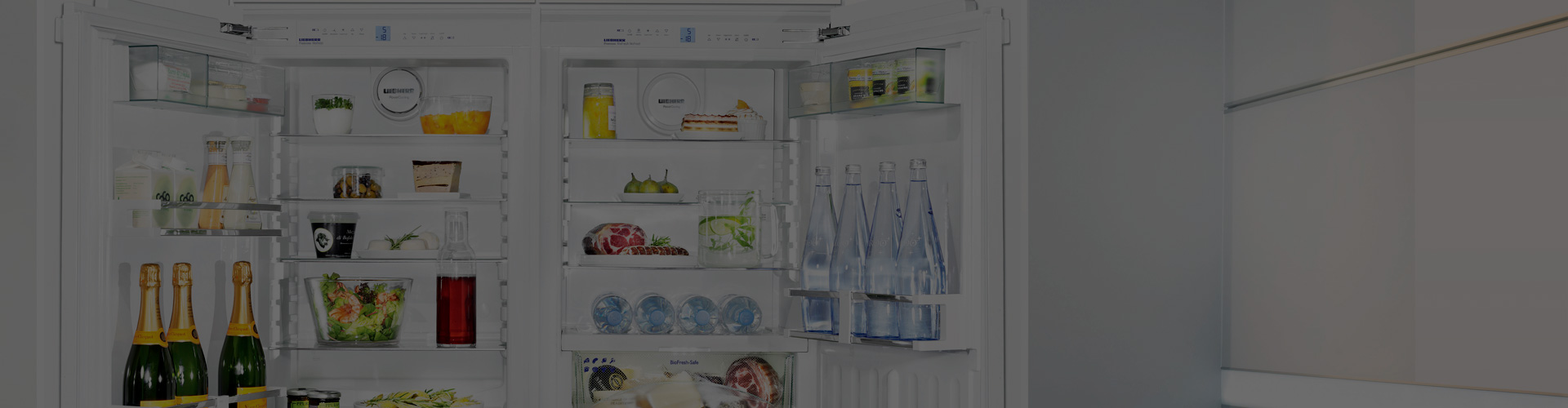

Innovation has always been the hallmark of fridge design through the decades!
But to make the most of all that wonderful technology incorporated into your fridge, it’s still important not to lose sight of the basics when it comes to organisation. Here are some tips and tricks to ensure your fridge is working at its best - and your food can stay at its freshest for longest!
Basics
To begin, we’ll go right back to fundamentals - because, like last week’s leftovers at the back of the fridge, it’s so easy to forget about them.
First, for optimum freshness, be sure to set your fridge to a temperature between 1°C and 4°C.
Second, as good at automatically responding to temperature fluctuations as modern fridges can be, you should still resist putting hot food into them - there’s a chance it will cause the overall temperature to rise.
Be sure not to over-stuff your fridge either, as it restricts the flow of air that enables the even cooling throughout the cavity space.
You can also be on the look out for outstanding examples of fridge technology which have been designed to counteract these problems. Fisher & Paykel's ActiveSmart™ Foodcare, for example, incorporates a microprocessor that is continuously fed information from interior temperature sensors - and then adjusts independently controlled fans and multiple air vents, accordingly.
Chill out
Help yourself to make space in your fridge - firstly by of course being conscious of food that may have gone off, and secondly by taking out anything that doesn’t actually need to be there!
Items that prefer room temperature include: honey, coffee, hot sauce (the vinegar will prevent bacterial growth) and bread.
Fruit and veggies like uncut stone fruit, avocados and tomatoes will also benefit from ripening on the benchtop - but of course, once cut open you’ll need to wrap them in plastic and put them in the fridge to preserve their freshness.
Don’t lose the leftovers
These days, we’re all very conscious of trying to minimise wastage - so it’s a good idea not to lose track of your leftovers. Keep them clearly identifiable in clear plastic and be conscious of not pushing them to the back of the fridge when you buy new groceries. If you run out of clear plastic options, opt to label you contents to avoid forgetting about their contents - and dooming them to oblivion.
Containers are not only a great way to bring some extra order to your fridge - they also help to keep things separate and prevent cross-contamination of any kind.
Avoiding cross contamination
Cross contamination is basically when bacteria or viruses are accidentally transferred from substance to another - and with so much food in close proximity, you should give some consideration to avoid it happening in your fridge.
A simple example would be if you were to inadvertently put some raw chicken contaminated by bacteria above a salad - juice from the meat could drip down, thereby potentially infecting the salad.
With that in mind, it’s always a good idea to keep raw meat, poultry and seafood sealed up in a plastic bag - and separate from everything else, including cooked meat.
Top to bottom
And that also informs the way you will stack the food in your fridge.
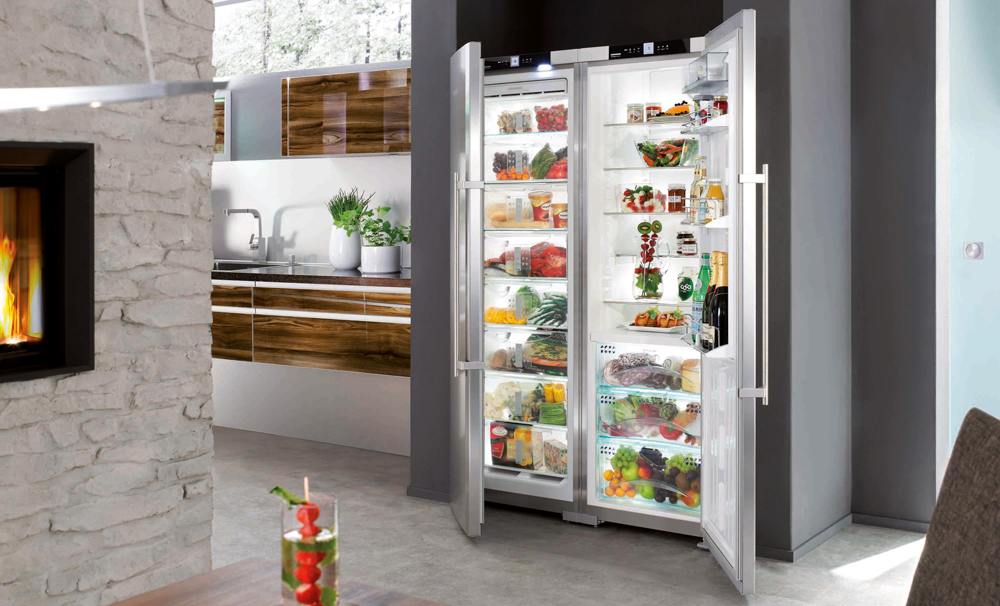
Let’s start from the top: generally speaking, foods that don’t need cooking - such as deli meats and leftovers - should be placed on the upper shelves.
Lower to middle shelves are ideal for dairy products (although it’s okay to keep softer dairy such as butter and cheeses away from the coldest parts of the fridge) while the bottom shelves are good for wrapped-up raw meat and fish.
Your fridge may have spill-safe glass drawers - but we still recommend putting raw fish and meats on the lower rungs to avoid drips and contamination to foods down below.
Door shelves are good for storing foods that have natural preservatives - such as your condiments, jams and juices.
As a rule - and this might surprise you - the door’s not such a good place to store your milk or your eggs because by its very nature, it’s the spot in your fridge with the most temperature fluctuations.
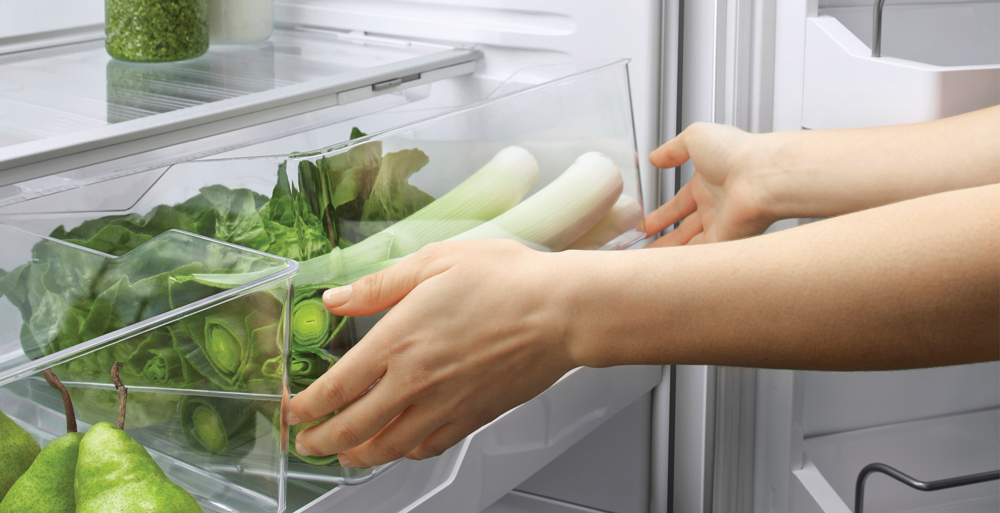
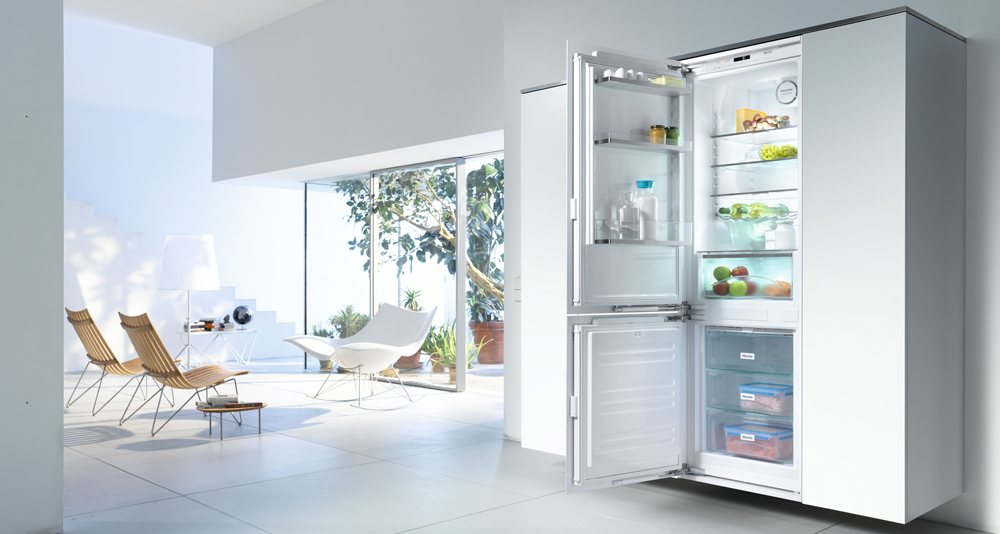
Look out for drawers which are designed for humidity and temperature adjustment - such as Liebherr's BioFresh compartments which give you precision control of storage conditions. These are clearly going to be your best bet for storing fruits and veggies ... just don’t be tempted to mix fruits with meats, to avoid cross contamination!
And here a few cool extra tips/tricks:
Unless you’re living alone: try labelling everything - and by everything, we mean the doors, storage baskets, the lot. It’ll make you seem a bit OCD, but your chances of keeping an ordered fridge will be greatly increased!
Put any cut/chopped onion or garlic in a strong glass bowl/container - their smell and taste is, well, very infectious! You need to be particularly aware to keep things like butter, milk, eggs, breads and cakes away from them - or anything strongly flavoured, for that matter
At Winning Appliances we pride ourselves on our post-sale service - so please feel free to contact us if you want to know how best to make use of your beautiful new fridge!